Moving to Mexico City – Air Quality
Air quality, after traffic, is the most common complaint amongst chilangos. It doesn’t seem that bad when you first visit the city or even in your first few months of living here. But the poor air quality drags on you, and after their first year living in Mexico City, many people start to see it as a major issue.
It’s bad, really bad. But supposedly it is better than it was in the ’80s. Many people begin to experience respiratory issues after several years of living here. Sometimes in the dry season the pollution and dryness team up to cause nose bleeds and sinus discomfort. On bad days, eyes get itchy.
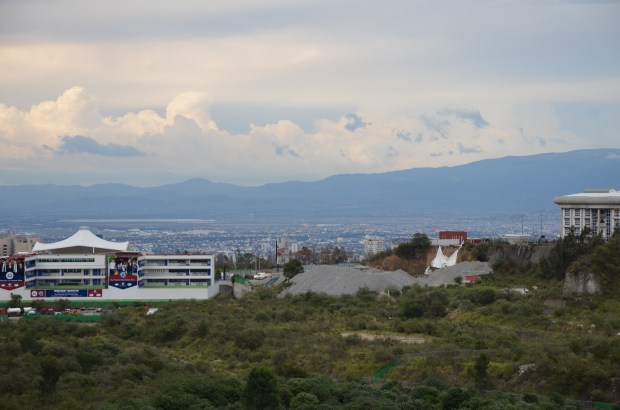
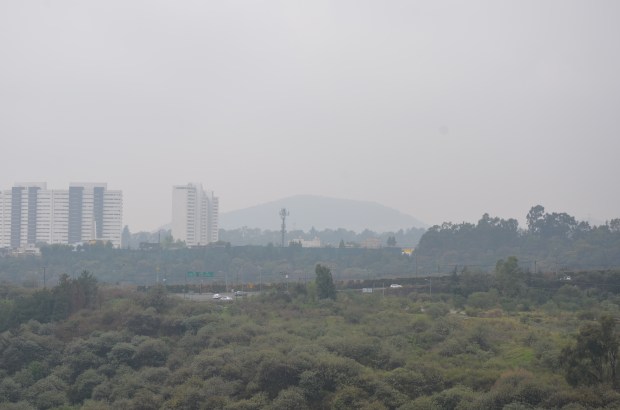
Downtown at street level it is usually not that noticeable visually, but when you get up high enough to have a view, you can see that visibility is worse. I would say that a bad day might have two city blocks of visibility. From a high rise in Santa Fe you can look down into the valley and see a thick cloud of smog. There are mountains on the other side of the valley, but when there is no wind they disappear.
Normally the smog is very bad only a few days per month, and the rest of the time it is more or less bearable. In the spring of 2016, however, things got a bit out of hand. Visibility was very low during the fall of 2015 and through the spring of 2016. The city eventually implemented special driving regimen called “Hoy No Circula 2016” in which every car had at least one day of rest per week.


Moving to Mexico City – Movers, Furniture and Appliances
Movers
Once you have found an apartment, signed a lease and gotten your keys, you’re going to have to find a way to get your furniture moved in. Most buildings designate one day of the week in which they allow moves. This is usually a Saturday, and they will require that you schedule your move ahead of time.
From a North American perspective, manual labor is very cheap in Mexico. You can hire a “moving company” to move a couple of bedroom sets, a sofa, and all of your smaller items less than MXN 3000-4000 for a move between two points anywhere within Mexico City. At that price you get a group of about 3-4 strong fellows with a rickety old moving van. With this program there is no insurance, so any damage incurred is for your account. These types usually show up with little more than there hands, some ropes, and maybe some old blankets to assist them in the move. They usually take an entire day to move a full apartment.
There will inevitably be a moment during the move when they all stop working and one of them approaches you to tell you that the original agreed price did not consider some aspect of the current situation. Perhaps there is a small set of stairs that you failed to mention, or the walkway leading to the apartment is longer than you had described. With this type of moving service it always happens. It is just a ploy to get a decent tip, and usually MXN 500-1000 divided evenly amongst the workers is enough to ensure the job gets finished.
Of course, there are more professional moving services that offer insurance, provide boxing services and generally come more prepared. They might have a crew of 15 people show up and knock out your move within a few hours. Their moving van will be state of the art, and they will cost anywhere from MXN 10,000 for the basic to MXN 20,000 for the “princess move.”
New Furniture and Appliance Deliveries
If you have no furniture and plan on outfitting your new apartment with purchases made in Mexico City, start with your mattress. You will need a place to crash after the long days of furniture shopping that lie ahead. You can buy a more expensive name brand mattress in one of the stores inside any of the big shopping malls like Centro Commercial Santa Fe, Plaza Insurgentes, Antara, or Palacio de Hierro, or you can head down to explore the mattress shops in the city center for something cheap. Dormimundo is a decent chain that offers all sorts of discount options.
The same can be said for furniture, you can buy some decent furniture with great style on the cheap down in the city center, or you can spend a fortune on furniture in the shopping malls. Any sort of large furniture or mattress will either come with free delivery or with delivery for an additional few hundred pesos. Furniture deliveries usually happen within a week of purchase. When it comes to deliveries, it is usually a struggle for working people to time them well. On the weekdays Mexico City traffic makes it impossible for delivery services to hit decent time windows. It is recommendable to ask for Saturday deliveries if they are possible. Otherwise you will likely miss your delivery men on the first couple of attempts.
Appliances and their delivery and installation are more difficult in Mexico than in some other parts of the world. It really doesn’t matter where you buy them. It will most likely be a huge hassle to get everything situated and working properly. Beyond the difficulties of timing the delivery to occur while you are home, there will then be some sort of installation service. The delivery and installation services are usually not one in the same. Sears for example, has a delivery crew that is not in contact at all with the installation crew. Be sure to discuss the installation with the sales team in the store before finalizing the purchase. Try to schedule the installation for a couple of weeks after the proposed timing for delivery. Otherwise the installation crew might show up before the delivery has even be made.
In Mexico, you should expect any service call or installation to happen in multiple visits. The first visit is usually just a visit to check out the situation and check off a box somewhere for having made an attempt. Usually the technician will spend some time reviewing some wiring or plumbing connections before claiming that he is missing a special tool that he needs and will have to reschedule. At this point, you will be unsure if he is trying to get a bribe out of you or telling the truth. Most often it will be the former, but if it is already late in the day, he might just be most interested in getting home. Some say that a few peso tip “para el refresco” can suddenly change a technician’s mind or make missing tools appear from nowhere. One thing is for sure, regardless of how much of the installation gets done in the first visit, there will be some reason to not finish the job and create the need for at least one more visit. This can be frustrating for working people, and it is just part of it. Newcomers should go ahead and make peace ahead of time with the fact that they will not have washers nor dryers for several weeks or months after paying for them in the store.
Moving to Mexico City – Renting an Apartment
Lease Agreement
For most of us, the first experiences we have when moving to Mexico City revolve around finding a place to live and ironing out the details of rent and lease agreements. It is not easy and sometimes can feel like the Mexican real estate environment is designed to prevent you from obtaining an apartment or house altogether.
Most newcomers are usually faced with the “aval” as their first obstacle in locking down an apartment. Believe it or not, Mexicans moving to CDMX from other cities and states are usually faced with the same obstacle. Most lease agreements in Mexico require that the renter offer some sort of collateral which is usually is required to be real estate in Mexico City proper. Someone who owns a house in the city is not likely to be very interested in renting an apartment, so it is a practice that is difficult to understand for new residents.
If you have been relocated to CDMX as an expat for a multinational, your company will likely provide the needed aval. Those without a company backing will have to find compromise. Sometimes new residents are able to convince landlords to accept multiple months rent in advance in return for waiving the aval. Others convince friends to allow the use of their property as aval. Every so often one can find a landlord that caters to tenants from outside of the city and is willing to rent without an aval. For Mexican nationals, say recent college grads, the most common way to find a place to live in CDMX is to find a “roomie” who as already been through the lease process and has a current lease agreement in force. Of course lease agreements usually include clauses that prohibit subletting, but in Mexico the practice is mostly overlooked. Going the roomie rout can be a cheap alternative for an expat who is unable to get an aval or a traveler who just needs a place to crash for a few months. Lease holders who are looking for roomies usually advertise on www.dadaroom.com.
Why so many obstacles? Mexico has a host of laws that favor tenants whether they are making their rent payments or not. Squatters are an important problem for landlords and real estate investors. In fact in Mexico an empty house with no tenants can be legally occupied by wandering souls. Once occupied, there is little an owner can do to rid his home of unwanted squatters. Contracts are usually designed to prevent the risk of a squatter, and are therefore more difficult for the rest of us.
Most lease agreements require the renter to pay 3 months of rent before getting the keys to an apartment. The 3 months are usually explained as the first and last month’s rent plus one month of deposit.
It’s a sound word of advice to assume that any non-colateralized money lent in Mexico is never going to be returned. For rent deposits and life in general, you should view lent or deposited money as lost money. It may be difficult to imagine your charming new landlord disappearing at the end of your agreement with the entire deposit and no reason to have done so, but it will happen. Usually once you have told the landlord that you are moving out, they will remain attentive and seem interested in “settling up” but only after you have moved all of your items out of the apartment. Curiously once all of your things are gone, the locks will change and your landlord will vanish. In the minds of landlords across the city, that deposit is theirs to spend on whatever they want. Mexican nationals usually try to combat this by ceasing to pay rent 2 months before moving out and settling up after having moved. It is a game of chicken, and usually the renter loses.
Colonias and Price Ranges
Neighborhoods in Mexico City are called “colonias”. There are many colonias in the city, but to give a general idea of price ranges and the type of apartments that are available, we will concentrate on the colonias of the center-west area of the city. These are the neighborhoods to the south of Paseo de la Reforma that surround Chapultepec park as well as those found to the west as one drives out of the valley and into the mountains. If you are comparing the city’s more than 2000 colonias to one another in a relative sense, these are some of the most expensive colonias to choose from. However, relative to neighborhoods in other major cities their rent rates are not all that bad. And while they might be a bit pricey for Mexico, these neighborhoods are the most likely to interest someone reading an English blog on Mexico City.

Street corner at the plaza Popocatepetl in Colonia Condesa.

Fuente de Cibeles in Colonia Roma.

Fountain at the plaza Popocatepetl in Colonia Condesa.

Parque Lincoln in Polanco.

Parque Lincoln in Polanco.

Avenida Santa Fe with her high-rise office and apartment buildings.
As a word of caution, I would emphasize the importance of living close to where you will be working. Often newcomers fall in love with neighborhoods that seem like a close commute at 10 am on a Saturday. It might be 10 km away on Google Maps and take only 5 minutes to drive on the weekend that you visit, but weekday Mexico City traffic is devastating. Depending on the route, a 10 km drive that takes 5 minutes on the weekend could take 45 minutes to 2 hours on a weekday at rush hour. The traffic in Mexico City will become a deciding factor in much of what you do. Driving to another neighborhood to eat on a Friday at 8 pm could take a couple of hours. It is a real problem and should not be taken lightly. Most people try to avoid cars altogether and spend most of their time within walking and bicycling distance. Try to live within a 45 minute walk of where you will be working. 45 minutes may be a long walk, but it’s totally doable when you can see that traffic is bad. And if it can be walked safely, then it can be biked safely.
The most popular neighborhoods in the city for young couples and single people are La Condesa, La Roma, and Polanco. Most consider them to be by far the most beautiful and charming areas of the city. They feel safe and have plenty of greenery, excellent walking and people watching, great food/drink and nightlife. The quality of life in these neighborhoods is amongst the highest in North America and is also distinctly Mexican. The Mexican culture is a strong one, and those looking for a high standard of living without sacrificing the charm and quirky enchantment of Mexico will be happy with any of these three.
For executives or people who prefer less enchantment and more high-rise style living, Santa Fe is a good option. Interestingly it was developed and built on the site of an old landfill. Navigating Santa Fe by car can be head spinning as the hilly terrain and engineering considerations make for a street layout that is not always intuitive. The buildings and numerous retention walls often appear the be a feat of modern engineering, but they are also usually impressive architecturally. Very chic and modern, Santa Fe is a popular area for multinational corporations looking to lease space in a sky scraper. It is some of the cheapest office space in the city.
Families looking for a place to raise school-aged children in a house with a yard are drawn to Interlomas and Bosques. Most people visiting these neighborhoods get lost on their first trip. Like nearby Santa Fe, Interlomas and Bosques are a labyrinth of residential streets that extend over and wind around mountains and ridges. There are some massive family complexes in this area, and it is common to see walled residential lots with security guard booths.
All of the colonias mentioned thus far are expensive for Mexico City.
The minimum monthly rent you will find in the Condesa, Roma, Polanco and Santa Fe neighborhoods will most likely not be less than MXN 15,000. Sure, if you spend 6 months looking around and making friends who happen to know someone, you can find something for a bit less. Some people are able to find a 1 bedroom apartment for 10,000. But most people new to Mexico City are more likely to find that the cheapest apartments in these neighborhoods run about MXN 15000 per month. For conservative budgeting purposes, one should probably use MXN 17000 as a minimum.
For that amount you will get a 1-2 bedroom space of 50-70 sq meters, and it will likely be on the less comfortable end of the available spectrum. Maybe there will be fewer windows and all with a view of an alley. In Condesa, Roma, Polanco, that level will get you an older apartment. Old in a bad way. Maybe it has not been remodeled since the 70s and could have a bit of a dingy feel. Santa Fe is a newer neighborhood, so your 17,000 will basically get you a place with no terrace, no view, perhaps poor amenities like gym/pool and lack of walkable shops or entertainment. It will, however, be new and modern. It will have basically zero Mexican charm.
At the higher end of the range, one could expect to spend MXN 25-30,000 for a 2-3 bedroom apartment or MXN 50,000 for a 4 bedroom family house with a yard. That type of rent gets you a very comfortable space with impressive views, terraces, pool, gym, steam/sauna, full-time security and prime location for walking to shops and entertainment. At MXN 25,000, most people will be very comfortable and have no complaints. But at 30,000 certain aesthetics start to get more impressive and apartments begin to have more “wow” factor.
When looking for a place to rent, remember that buildings have monthly maintenance fees. All of the values that I have mentioned above include maintenance fees which can run anywhere from MXN 1200 to MXN 5000 per month. Usually the nicer the amenities of the building, the higher the maintenance fees, but it is also related to the building’s rate of occupancy. Higher occupancy should mean lower maintenance fees.
A great tool for apartment hunting is www.metroscubicos.com, but walking neighborhoods and speaking with building receptionists can still yield special deals and good results.
 cdmxlive